.png)
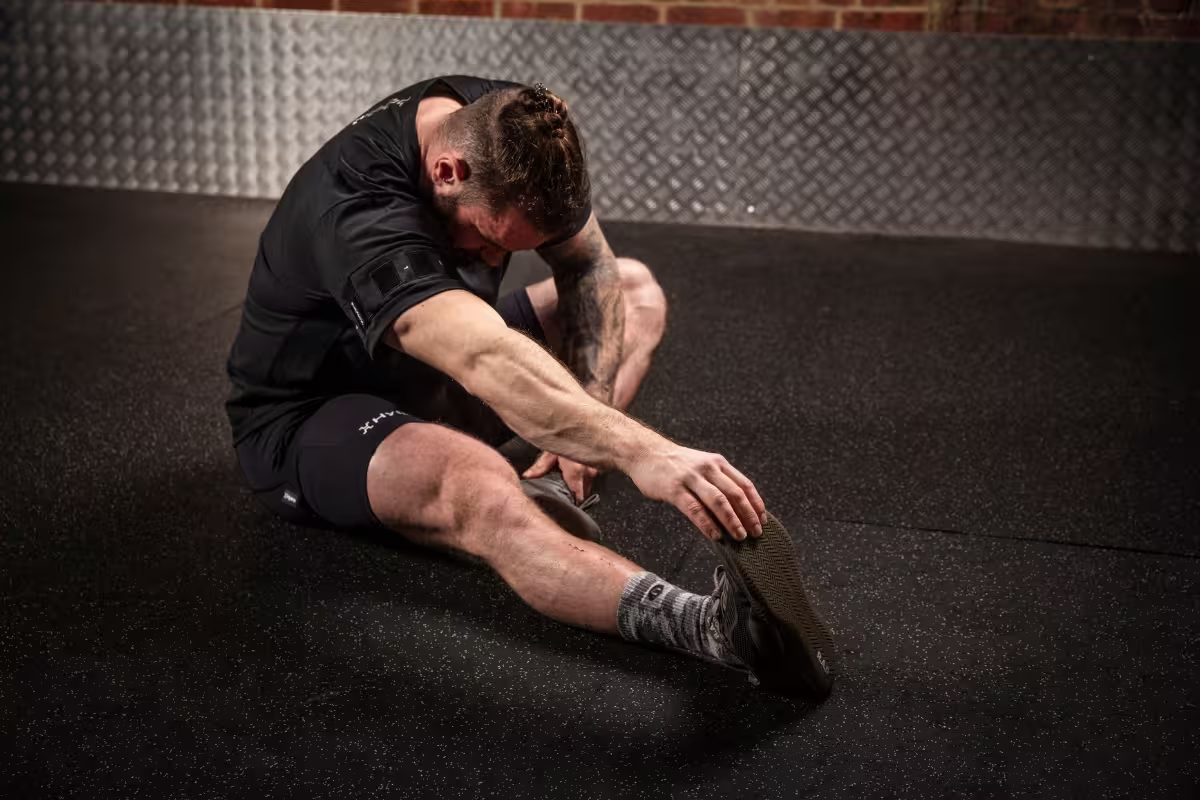
Blood flow restriction is giving runners a way to build strength, boost aerobic fitness, and recover faster—without sacrificing mileage or joint health.
Building strength without sabotaging endurance has always been a tradeoff. Lift heavy and your legs feel cooked for days. Skip strength and durability suffers. According to Jonah Rosner, blood flow restriction training may finally close that gap.
Rosner—an NFL-experienced performance coach and sports science educator—is partnering with Hytro to show runners and hybrid athletes how Performance BFR can drive strength, aerobic gains, and recovery without wrecking run quality.
Blood Flow Restriction (BFR) works by partially restricting blood flow to working muscles, creating a low-oxygen, high-metabolic-stress environment. That signal tells the body to adapt—fast.
The result:
In short: many of the benefits of heavy lifting, without the heavy cost.
Rosner has seen BFR become a performance multiplier for endurance athletes because it solves multiple problems at once:
As one study Rosner points to concluded, low-intensity BFR is one of the rare methods shown to improve aerobic fitness and muscular strength simultaneously.
The research—and real-world application—supports BFR as safe when used properly. Over 99% of reported side effects are minor, such as temporary numbness or discomfort. That said, athletes with a history of blood clots, severe cardiovascular disease, or uncontrolled hypertension should avoid it.
For healthy runners, the risk-to-reward ratio is compelling.
Rosner favors Hytro’s Performance BFR wearables because they make BFR simple, repeatable, and practical:
Instead of replacing training, BFR layers into it—enhancing what athletes already do.
Blood flow restriction is moving out of rehab clinics and into mainstream performance. I am a huge fan of BFR. It helped me recover for both my shoulder and hip surgery but embedding it in clothing is next level. With voices like Jonah Rosner backing it and platforms like Hytro making it wearable and practical, BFR is emerging as a joint-friendly way to get stronger, fitter, and more resilient—without compromising the run.

.png)


.png)

_converted.avif)